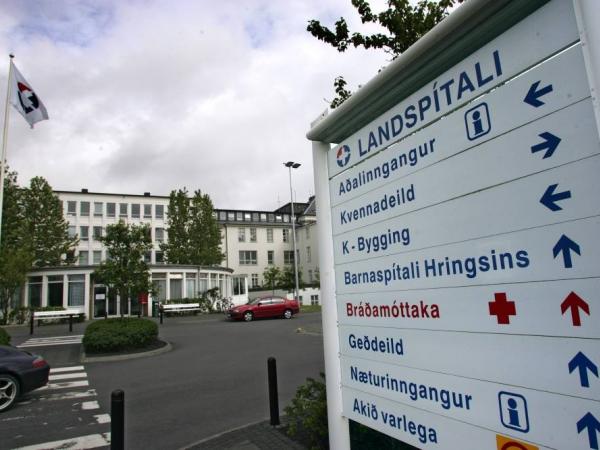
On our second day in Iceland we also had the chance to visit their main hospital, Landspítali. Their largest location is located in Reykjavik and they have an additional 17 smaller locations scattered along the coast of the island. All nursing students come through Landspítali for education as they are the only hospital that works in conjunction with the University to provide what they closely described as clinicals. An interesting difference in Icelandic nursing education compared to the United States is that there is no National Council Licensure Examination (NCLEX) for nursing graduates. Simply graduating earns them their license and continuing education to maintain it does not seem as strict as it is in the US either. Similarly to the US, there is a major shortage of nurses in Iceland. Our speaker stated that she would easily hire 200 nurses today if she could, expressing that the shortage was becoming a large issue most likely due to low pay and other competitive job markets. However, even with this shortage, the hospital is the only one on the island that has the resources to care for all types of births. All other hospitals are only acceptable for births greater than 34 weeks and low risk births only. We had the opportunity to speak with the head midwife on site and learned about the various practices used during the labor process that are not as recognized in the states. The main difference is the use of midwives. For every labor, each woman will have a personal midwife throughout the delivery and only if necessary, will an obstetrician be involved. This is definitely not the standard practice in the states and could possibly reflect the differences in maternal and infant mortality rates between the two countries. They also use other practices for pain that were different from the US where epidurals are usually highly recommended. For instance, they readily provide nitrous oxide for pain relief as well as aromatherapy and acupuncture. They also use water baths, massages, and yoga balls. As progressive and patient centered this hospital seemed, they are still struggling to improve their high induction rate. However, their use of midwives who continue to push for natural births that are in no way physically or drug induced should eventually help this issue.


